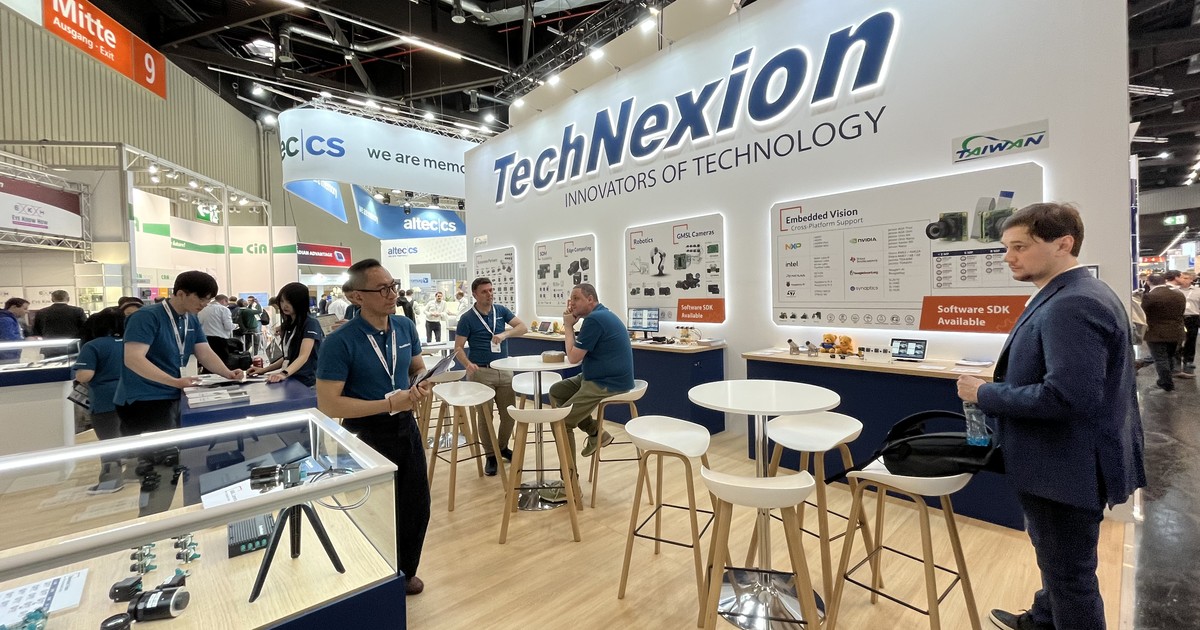
Summary: From 10 to 12 March 2026 we were at embedded world in Nuremberg, the main meeting point of the embedded industry. We went with a concrete job for an OEM client: choose the cameras and the system-on-module for their product, and see what is new from the silicon vendors.
Choosing cameras for an OEM client
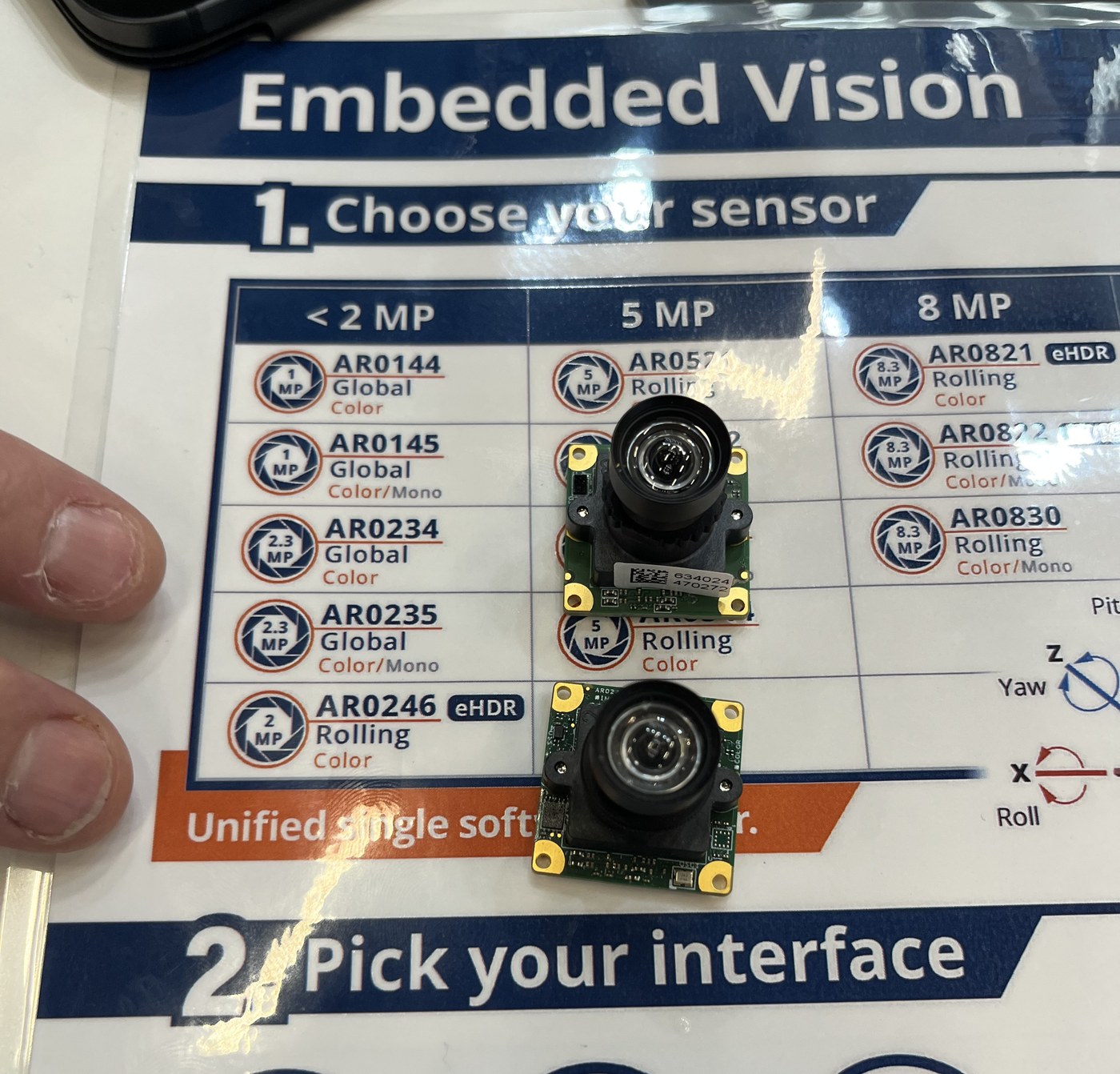
For a client’s vision-based product we worked through image sensors and camera interfaces with TechNexion, from global- and rolling-shutter sensors to MIPI CSI-2, USB and GMSL2 connections, and chose TechNexion cameras for the project.
Getting the sensor, optics and interface right early is what makes the edge AI and computer vision work later. We wrote more about that in The most expensive mistake in edge AI.

What’s new from NXP
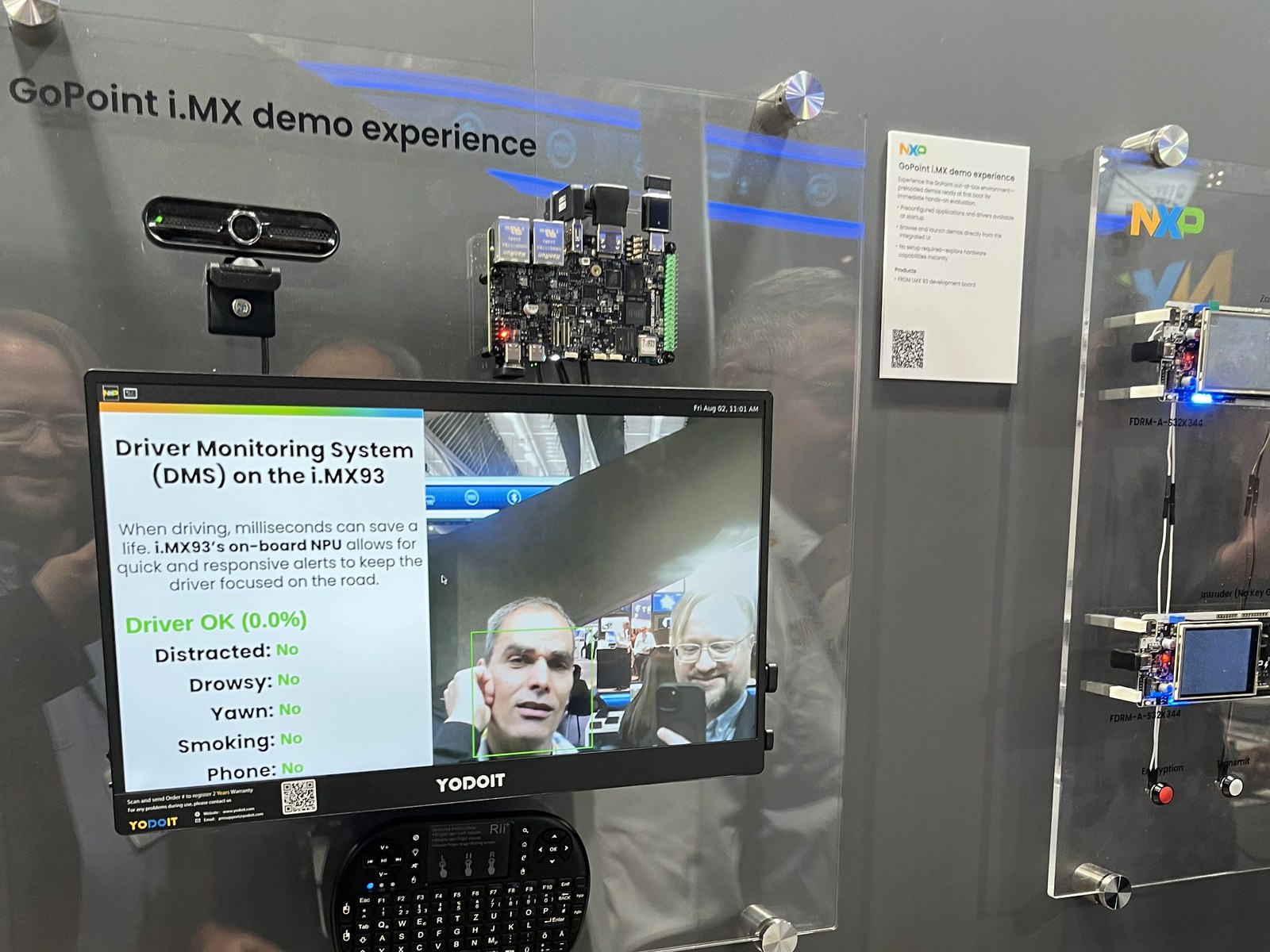
At NXP’s GoPoint demo wall we looked at a driver monitoring system running on the i.MX 93, using the processor’s on-board NPU to flag distraction, drowsiness and phone use in real time.
It shows what a small NPU can do when the camera pipeline is designed around it, the same trade-off we work through when we build embedded Linux for camera-based products.
Meeting SoM vendors
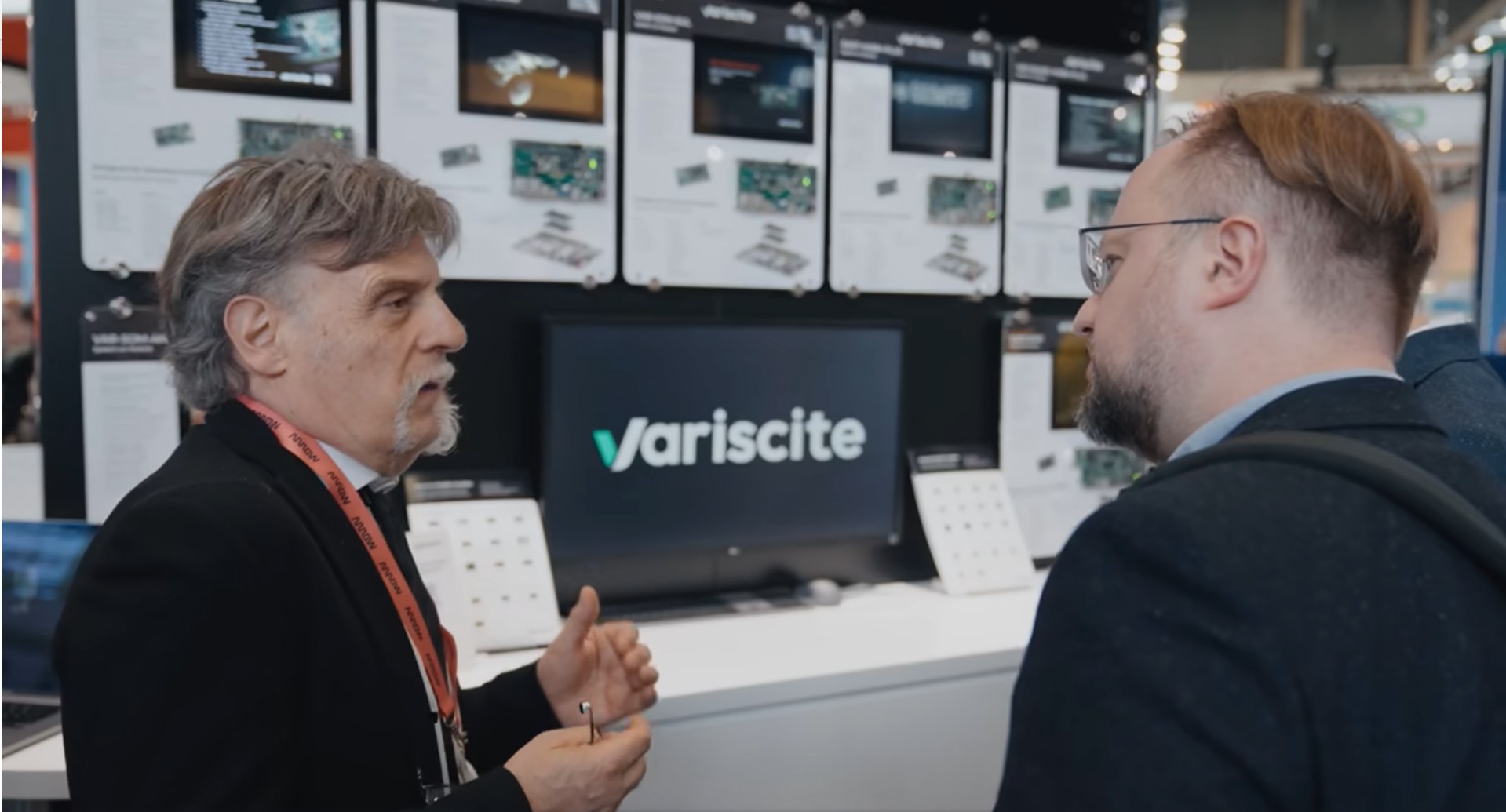
We also met major system-on-module vendors to select the SoM for the same client, comparing modules against the product’s camera, AI and lifetime requirements.
This is the work we do in a SoC and SoM selection review: the module chosen at this stage sets the product’s cost, software effort and lifetime for years.

How we help
Choosing cameras, processors and modules for a connected product? We help from architecture and SoM selection to embedded Linux and edge AI and computer vision. Talk to an engineer.