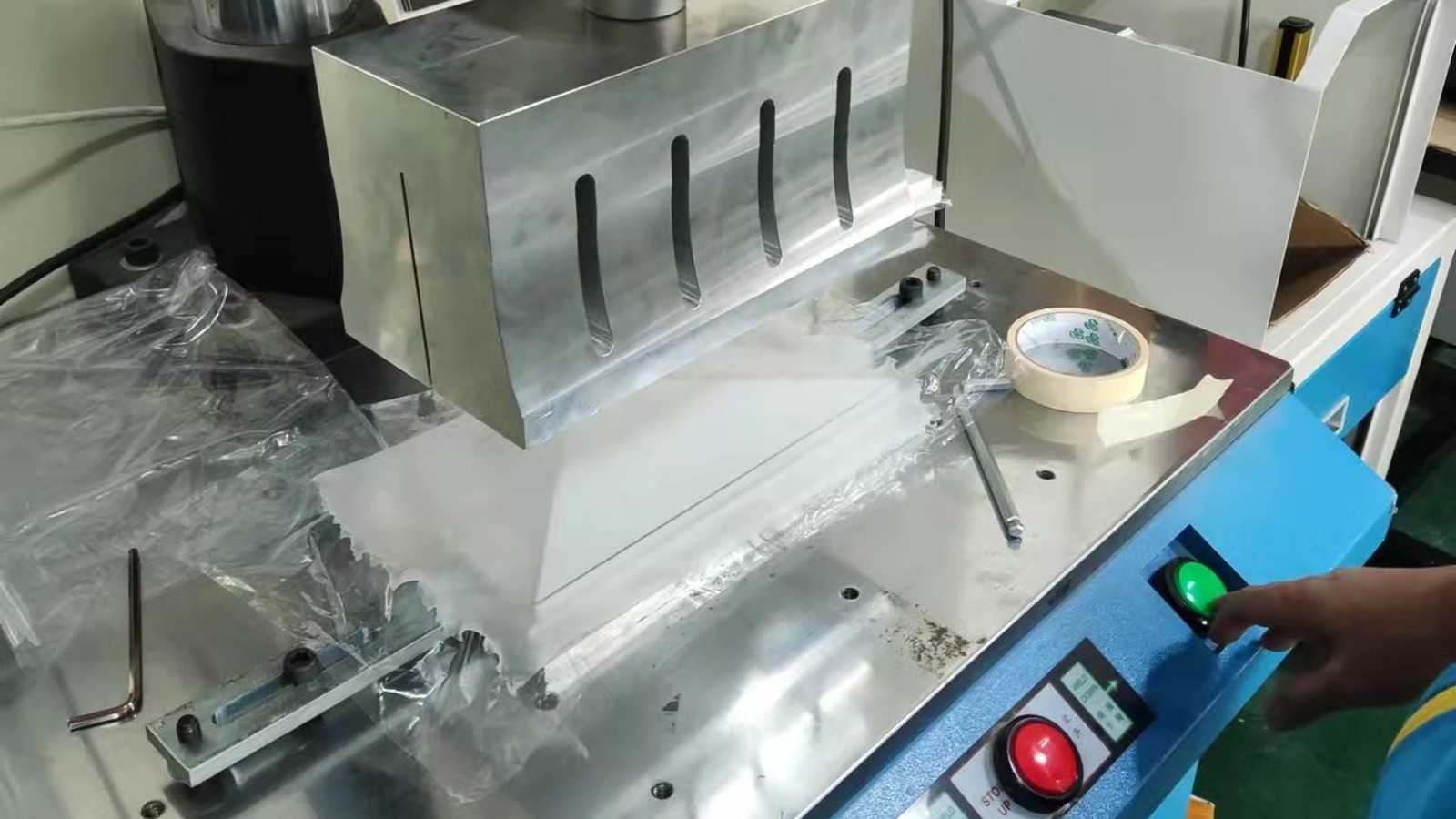
Summary: Glue is the fastest way to build a prototype. In production, it is one of the most expensive ways to hold parts together. The display panel of LaMetric SKY is three parts, a white frame, a film and a clear panel on top, and we weld them into one unit without a drop of glue. This post explains what glue really costs on a production line, why the question is not “glue or no glue” but a decision for every joint, and how the EU Batteries Regulation adds one more reason to decide early which joints must open.
Why glue wins on the prototype
On a prototype, glue is almost always the right call. It is quick, it needs no tooling, and it forgives a lot. A part that doesn’t quite fit, a gap where two printed parts meet, a component that rattles: a bit of glue and the demo holds together by Friday.
That forgiveness is exactly the problem. Glue hides tolerance problems. The prototype works, so nobody asks why the parts didn’t fit on their own, and the joint goes into the production design as it is. The question of how the parts should be held together is answered by default, not by design.
What a drop of glue becomes in production
In production, every drop of glue becomes a process. What took a minute on the bench turns into a station on the line, with its own equipment, its own failure modes and its own cost:
- A dispensing step, a fixture and a cure time on the line. The parts have to be held in place while the glue sets, and the line waits for it.
- A dirty station. Excess glue, wiped parts and cleaning are part of the job, every shift.
- One more variable in quality. Too much, too little, not cured yet. Each is a way for a unit to fail that a design without glue simply doesn’t have.
- A consumable to buy, store and track. Glue has a shelf life, storage conditions and a supplier, like any other part on the bill of materials.
- A bad unit that’s hard to rework. Once the glue has set, a misaligned part usually means a scrapped assembly, not a quick fix.
None of these costs shows up on the prototype. All of them show up on every single unit the factory builds.
The more glue, the less design
Our rule of thumb: the more glue a design needs, the less design went into how its parts fit together. Glue is often a sign that a joint was never really designed. The parts were shaped first, and the question of what holds them together came later.
The alternative is to design the joint along with the parts. That means deciding, for each pair of parts, how they locate against each other, what holds them, and whether they will ever need to come apart again. Answered early, those questions shape the geometry: a snap-fit needs a hook and a catch, a screw needs a boss, a weld needs features that are designed to be welded.
One joint at a time: the LaMetric SKY panel
LaMetric SKY is a modular light made of panels. Each display panel is three parts: a white frame, a film and a clear panel on top. Those three layers will never need to come apart in the life of the product, so they don’t need to open.
We weld them into one unit, without a drop of glue. A welding press joins the three parts with the same settings for every unit. There is no dispensing step, no cure time and no excess glue to clean off. Every panel that comes off the press is joined the same way as the one before it.
Welding is permanent too
Welding is not a free pass. A weld is just as permanent as glue: you can’t open it for service, repair or a battery swap. So the question isn’t glue or no glue. It is a decision for every joint:
| The joint | How we hold it together |
|---|---|
| Must ever open, for service, repair or a battery swap | Screws or snap-fits |
| Will never open, like the layers of a display panel | Parts designed to be welded: no glue, no cure time, the same settings for every unit |
| Neither works | Glue, as a defined, controlled process step |
The last row matters. Glue is not forbidden. It is just never the default. When it is the right answer, it gets the same treatment as any other process step: a specified adhesive, a defined amount, a fixture, a cure time and a check.
Regulation pushes the first question too
The first row of that table is no longer only a design choice. From 18 February 2027, the EU Batteries Regulation requires portable batteries in products to be removable and replaceable by the end user, with some exceptions. For a product with a battery, a glued battery becomes a redesign, and so does a welded one.
That makes “must this joint ever open?” a question to answer on the first layout of the enclosure, not after the tooling is ordered. If the answer is yes for the battery, the joints around it need screws or snap-fits, and the enclosure has to be designed so an end user can actually get to it.
From prototype to production
The short version fits in two lines:
- Prototype: glue and tape. Fast, forgiving, and fine for a demo.
- Production: screws and snap-fits where it must open, welds where it never will, and glue only where neither works, as a controlled step.
The move from the first line to the second is a design task, and it is much cheaper before the moulds are cut than after. A good moment to do it is when the prototype starts to look like the product: go through every glued joint and ask whether it ever needs to open.

How we help
At Smart Atoms we design enclosures and parts for assembly, so the factory builds the same unit every time. That includes deciding with you how each joint is held together, designing snap-fits, screw bosses and weld features into the parts, and preparing the product for a smooth production ramp. See our design for manufacturing and test and enclosure and mechanical design services. If your product still has glue in places it shouldn’t, talk to an engineer.
Source: Smart Atoms, from the design and production of LaMetric SKY. Battery rules: Regulation (EU) 2023/1542, Article 11, and the European Commission’s guidelines on battery removability and replaceability.