Summary: LPDDR4 and DDR4, the memory most embedded devices use, are getting more expensive and harder to buy. No design avoids a market-wide price rise, but two decisions made before a design freeze decide how hard it hits: keeping a choice of RAM vendor, and not needing more RAM than the product uses.
What happened
On 1 October 2026, Raspberry Pi raised its prices again, this time on its cheapest 2 GB boards. The reason is one part: the LPDDR4 RAM it buys cost seven times more this spring than a year before, according to the company’s CEO.
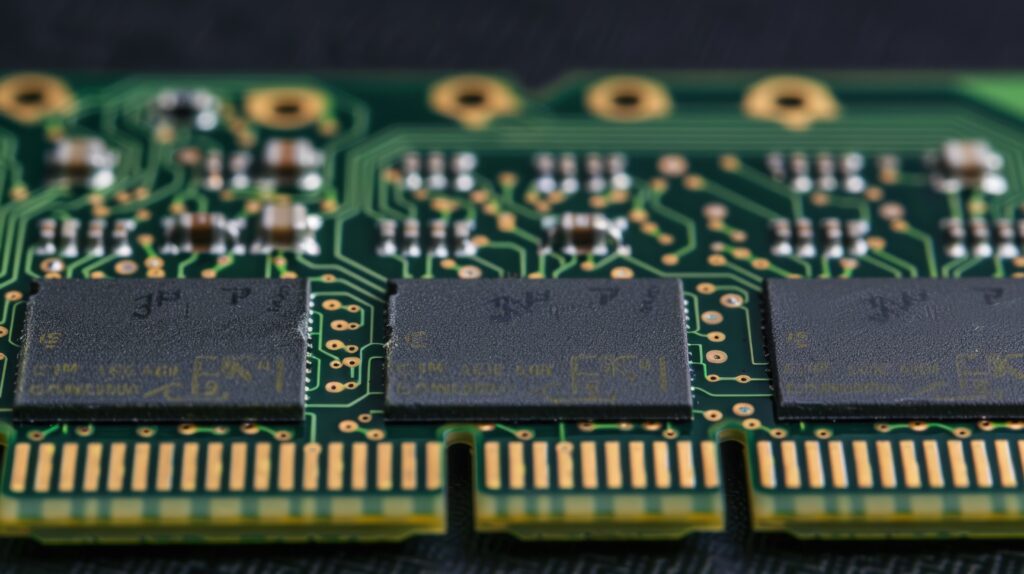
Memory makers are putting their capacity into memory for AI. Older RAM types like LPDDR4 and DDR4, the ones most embedded devices use, get no new capacity. TrendForce expects them to stay short through 2026, with prices still rising.
Why this matters for connected products
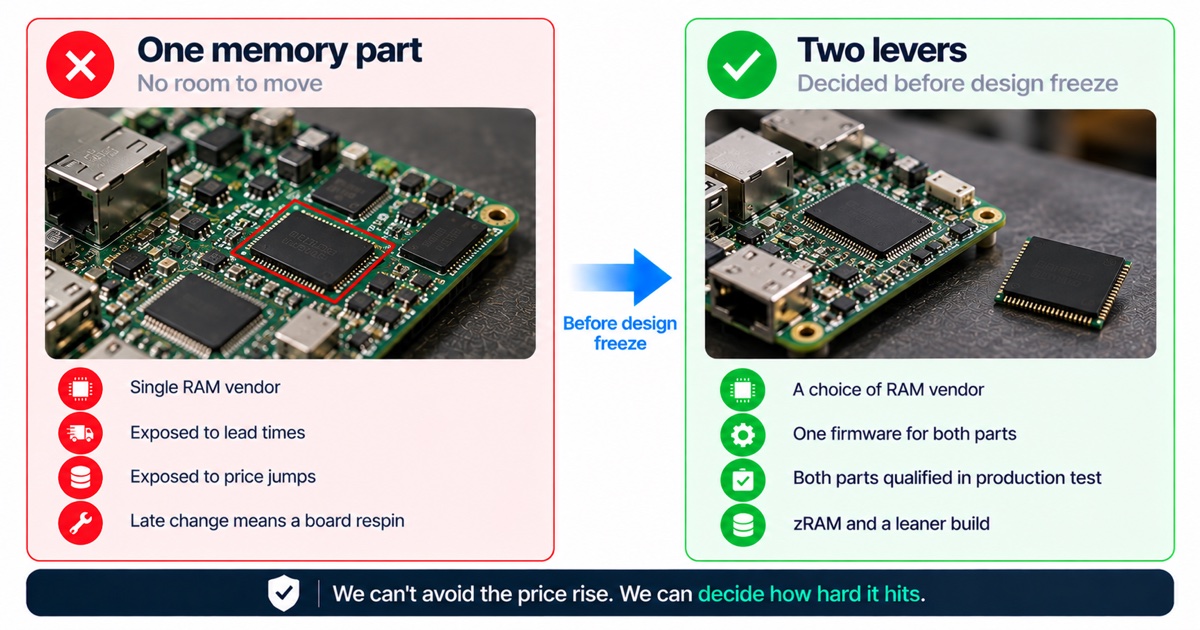
For a connected device, RAM is often one of the most expensive parts on the bill of materials, and one of the hardest to replace late. A board designed around a single memory part has no room to move when that part’s lead time grows or its price jumps. The same choice made early costs almost nothing.
We can’t design our way out of a price rise that hits every vendor. We can decide how hard it hits. There are two levers.
Lever 1: keep a choice of vendor
On LaMetric, the same board supports RAM from both Samsung and Nanya. When one vendor’s lead times grew, or the other quoted lower that quarter, our team picked the better option without touching the design.
What this takes in practice:
- Pick a RAM type, package and density that at least two vendors make.
- Make one firmware image work with both parts.
- Qualify both parts in production test, not only the first one.
Dual sourcing does not stop a market-wide price rise. It does stop a single vendor’s lead time or quote from stopping your production line.

Lever 2: don’t need more RAM than you use
Raspberry Pi’s own answer was more memory sizes, including a new 3 GB Raspberry Pi 4, so customers don’t pay for RAM they don’t need.
We made the same choice on LaMetric SKY. When software memory needs grew past the original 128 MB, the team profiled and optimised the code and introduced zRAM, which compresses memory pages inside RAM, instead of moving to a bigger memory chip. The product kept its original hardware configuration.
Before buying a bigger chip, check whether zRAM and a leaner build cover the gap.

When to act
The cheapest moment to pull both levers is before the design is frozen. After that, a second memory source or a smaller RAM size means a board respin, new certification tests and new production test fixtures.
A short review before production answers two questions: which parts in the bill of materials could stop the line, and what is worth changing now.
How we can help
Our engineering teams run architecture and component lifecycle reviews before production, drawing on the same decisions we made for our own LaMetric devices. If you are about to freeze a design, talk to an engineer.
Sources: Raspberry Pi’s 1 October price rise on the 2 GB boards; TrendForce on the DDR4 and LPDDR4 shortage.