Summary: Making one prototype work is rarely the hard part in IoT. The hard part is making thousands of devices behave consistently after they leave the factory. That is where end-of-line (EOL) testing becomes critical.
You often get one chance at a review
From our very first product, we were always thinking about one thing: you often have only one chance to get a great customer review. Especially on Amazon, a single defective device can turn into:
- A bad review.
- A product return.
- Loss of customer trust.
That is why we invested early in end-of-line testing for our smart displays.
From our own line to a reusable framework
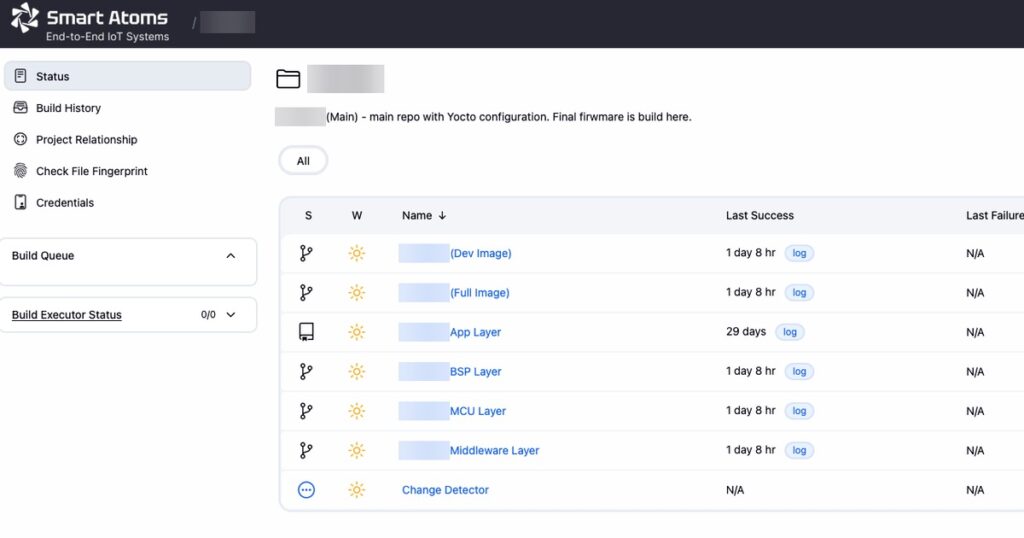
Over the last decade of smart display manufacturing, this gradually evolved into a modular EOL system: our Manufacturing Test Framework. It is continuously refined across our own products and OEM projects to help target low defect rates in production.
Where EOL fits in production testing
Production testing usually happens in stages. Each stage catches different problems, and finding a fault earlier is cheaper than finding it later:
| Stage | When | What it catches |
|---|---|---|
| Board test | After PCB assembly | Assembly faults, missing or wrong components, basic electrical problems |
| Functional test | Board or sub-assembly powered up | Peripherals, radios, memory and interfaces that do not work |
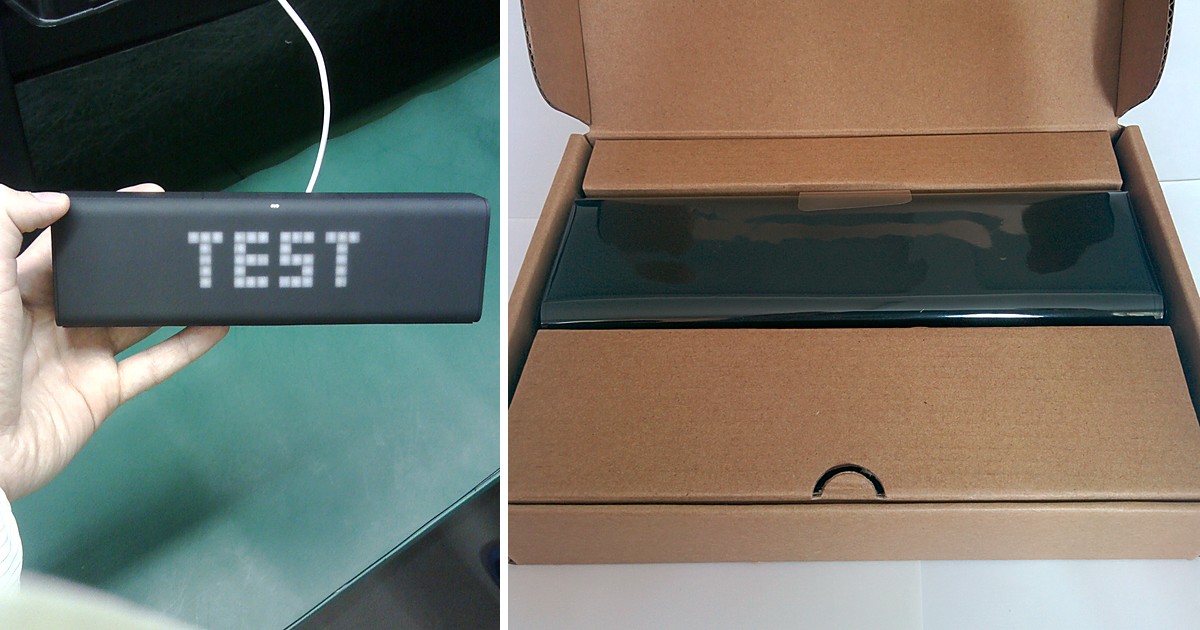
| End-of-line test | Finished device, before packing | The device as the customer will use it: display, buttons, connectivity, identity, cloud |
| Aging or burn-in | Finished devices running for a period | Early-life failures that appear only after hours of operation |
What typical EOL verification covers
- Firmware flashing.
- Connectivity checks.
- Display and LED validation.
- Sensor and button testing.
- Power stability checks.
- Security key provisioning.
- Device identity and serial traceability.
- Cloud communication validation.
What makes an EOL station work on a real line
- Speed. Test time adds directly to production time. Tests should cover what matters without slowing the line.
- Clear results for operators. A simple pass or fail, with instructions when a unit fails, reduces mistakes.
- Records for every unit. Test results, firmware version, keys and serial number stored per unit make it possible to trace a field problem back to production.
- Repeatability. The same tests and limits on every station, so a second line or another factory produces the same result.
- Security. Keys and device identities must be provisioned without exposing them on the factory floor.
Common failure modes
- Tests written for the lab that take too long on the line, so operators skip steps.
- No record of which firmware and keys went into which unit.
- Limits set too loosely, so marginal units pass and fail in the field.
- Station software that only one engineer understands, which blocks any change.
- Connectivity tests that depend on a factory network that behaves differently from customers’ networks.
Consistency at scale
The difficult part in IoT is rarely making one prototype work. The difficult part is making thousands of devices behave consistently after leaving the factory. That is where end-of-line testing becomes critical.

Checklist for your EOL plan
- List every function a customer will use, and decide how each one is verified.
- Define pass and fail limits, and how failed units are handled.
- Plan firmware flashing, key provisioning and serial numbers as part of the same flow.
- Decide what data is stored per unit and where.
- Design for test early, so test points and interfaces exist on the board.
- Run the station on a pilot batch and measure test time and false failures.
Designing for test from the start
The quality of end-of-line testing is decided long before the station is built. If the board has test points for the signals that matter, the firmware has a test mode that exercises every function, and the enclosure allows the device to be placed in a fixture quickly, testing is fast and reliable. If these were not planned, the station has to work around the design, and tests become slower and less complete.
That is why test planning belongs in the design reviews, together with the electronics, firmware and mechanical design. The same applies to provisioning: deciding early how keys, certificates and serial numbers reach each device keeps them secure and traceable.
Using test data after shipping
Per-unit test records are not only for the factory. When a problem appears in the field, linking a device’s serial number to its production results, firmware version and component lots shows whether the issue is limited to one batch or affects the whole fleet. That turns a potential recall into a targeted fix, often delivered as an over-the-air update.
FAQ
Can the manufacturer handle EOL testing alone?
They run it, but the product owner should define what is tested and own the limits and the data. That is what decides what reaches customers.
How long should an EOL test take?
As short as possible while covering every customer-facing function. Measure it on the pilot line and balance it against the line’s cycle time.
Is aging always needed?
Not always. It is most useful for products where early-life failures are likely or costly, and it adds time and space on the line.
What should happen to units that fail?
Define it in advance: whether the unit is retested, repaired or scrapped, who decides, and how the failure is recorded. Failure data from the line is one of the best sources for improving the design and the process.
Can the same station be used at another factory?
It should be. Design the station, software and limits so they can be reproduced, with documentation and calibration procedures, so moving or adding a production line does not mean starting again.
How do we keep tests up to date?
Treat the station software like product software: version it, review changes and release it in a controlled way. When the product changes, through a new hardware revision or new firmware, update the tests at the same time and check them on a pilot batch before using them on the full line. Keep a record of which test version was used for each unit, so field data can be compared correctly.
How we help
We set up production test, flashing and provisioning for client products on the same framework we use for our own devices. The Manufacturing Test Framework accelerator speeds up your product’s path to production with SMT, FATP, aging and per-unit reports already in place, and our production test and programming and factory-to-field traceability services adapt it to your line. If you are planning your production line, talk to an engineer.